
Rails 6 introduced new helpful methods in this article I will clarify that methods with a brief explanation
create_or_find_by
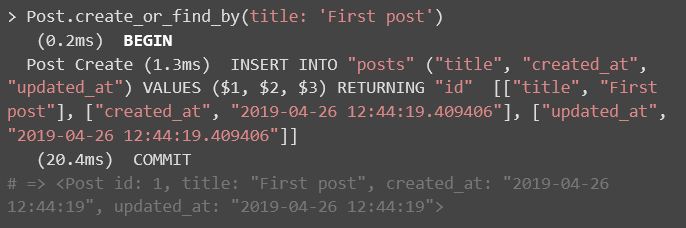
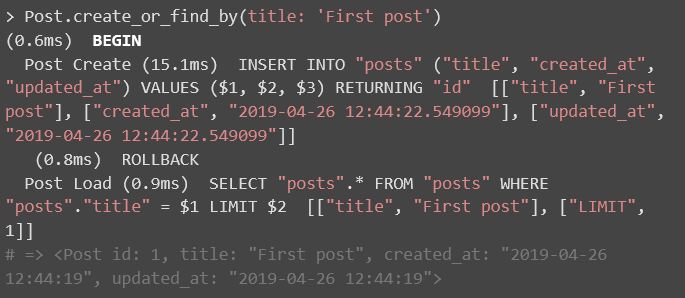
create_or_find_by Method added to Rails 6. it rely on unique constraints on the underlying table. It is used to create a new record in the database with given data that has one or more unique constraints of its columns. If a record already exists with unique constraints, it raises an exception which is the same as raised in insertion and finds the existing record with given attributes using find_by
class CreatePosts < ActiveRecord::Migration[6.0]
  def change
    create_table :posts do |t|
      t.string :title, index: { unique: true }

      t.timestamps
    end
  end
end
class Post < ApplicationRecord
  validates :title, presence: true
end
upsert_all
upsert_all Updates or inserts (upserts) multiple records into the database in a single SQL INSERT statement. It does not instantiate any models nor does it trigger Active Record callbacks or validations. Though passed values go through Active Record’s type casting and serialization.
The attributes parameter is an Array of Hashes. Every Hash determines the attributes for a single row and must have the same keys, the example below clarify the use of upsert_all
Book.upsert_all([
  { title: "Rework", author: "David", isbn: "1" },
  { title: "Eloquent Ruby", author: "Russ", isbn: "1" }
], unique_by: :isbn)
insert_all
insert_all inserts multiple records into the database in a single SQL INSERT statement. It does not instantiate any models nor does it trigger Active Record callbacks or validations. Though passed values go through Active Record’s type casting and serialization.
The attributes parameter is an Array of Hashes. Every Hash determines the attributes for a single row and must have the same keys. the example below clarify the use of insert_all
Book.insert_all([
  { id: 1, title: "Rework", author: "David" },
  { id: 1, title: "Eloquent Ruby", author: "Russ" }
])